


Over the next few weeks, in a three-part series of blog posts, we’ll take a deeper dive into the JUULing and vaping epidemic among youth in King County and across the country. We’ll look at what youth are doing in King County, what parents can do to help keep their kids tobacco-free, and how e-cigarette use can lead youth to a lifetime of nicotine dependence.
What looks like a flash drive, tastes like candy, smells like nothing and could cause lifelong nicotine dependence? JUUL, the latest trend in e-cigarette consumption or “vaping,” and it’s taken the tobacco industry (and likely, your local high school) by storm. The sleek electric device that plugs into USB ports is by far the most popular e-cigarette product, amassing 70% of the market since its introduction just three years ago.
So, what do you need to know? Let’s break it down.
Youth are using e-cigarettes more than any other tobacco product, and when they do, they’re probably using JUUL. While youth tobacco use is on the decline, it’s still very popular. In a recent national survey, 3.6 million middle and high school students said they were current tobacco product users, and more than half used e-cigarettes.


We even had a few instances of students as young as 5th grade vaping at school this year. Students have been found vaping on campus, in the bathrooms and hallways, and in parking lots. Students report not knowing that vaping is illegal on campus or for people under age 18. Students also report not knowing the potential negative effects vaping may have on their health – Lisa Davidson, Prevention and Intervention Manager, Seattle Public Schools
Why JUUL? They taste good, and they’re easy to hide. Flavored tobacco products have been proven to appeal to young people and facilitate the start of tobacco product use. Almost all e-cigarettes used by youth are flavored to taste like menthol, alcohol, candy, fruit, chocolate or other sweets. JUULs come in an assortment of enticing flavors, from 

Sound like a product designed with youth in mind? Massachusetts Attorney General Maura Healey thinks so. Her office is investigating JUUL Labs, Inc and other online e-cigarette retailers that sell JUUL and JUUL products over concerns about marketing and selling these products to minors.
Earlier this year, in May, the US Food and Drug Administration, and the Federal Trade Commission issued warning letters to manufacturers, distributors, and retailers for selling liquids used in e-cigarettes with labeling and advertising that resembles kid-friendly food products, such as juice boxes, candy and cookies.


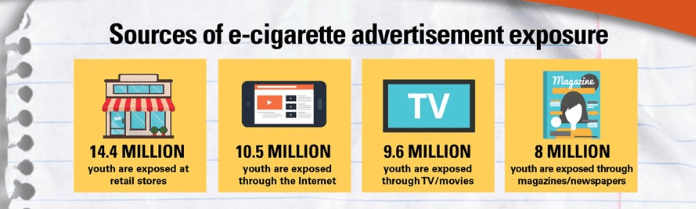
JUULs and other e-cig companies are following in the marketing footsteps of Big Tobacco. Tobacco companies have a long history of marketing products to youth, and e-cigarette companies, including JUUL, are no exception. As demand increased, e-cigarette companies rapidly increased advertising spending, from $6.4 million in 2011 to $115 million in 2014. More than 18 million middle and high school kids were exposed to e-cigarette ads in 2014. About 1 in 2 middle and high school kids were exposed to e-cigarette ads in retail stores, and nearly 2 in 5 saw e-cigarette ads online. These advertisements can entice youth who would never smoke a cigarette to try vaping.

Stay tuned for the next in our series of blogs on youth and vaping. We chatted with Seattle Public Schools Prevention and Intervention Manager, Lisa Davidson, to get the best tips for parents on what they can do to help their kids remain tobacco-free.
Image credit: http://www.time.com, http://www.fda.gov and http://www.cdc.gov
Originally posted on August 6, 2018